To be super clear, Isoflavones are not hormones. They are not HRT. They do not “replace” oestrogen.
But they do work gently with oestrogen receptors in the body, which is why researchers have been curious about their role in menopause nutrition, hot flushes, bone health and wider midlife wellbeing.
At MPOWDER, we like plant compounds that do quiet, clever things naturally. Isoflavones are exactly that.
What are isoflavones?
Isoflavones are bioactive compounds found in plants. The best-known are:
- Genistein
- Daidzein
- Glycitein
These are most commonly associated with soya beans and foods made from soya, including tofu, tempeh, edamame and soya yoghurt. Red clover also contains isoflavones, including biochanin A and formononetin, which is one reason it has traditionally been used in menopause-focused botanical formulations.
The reason isoflavones have attracted so much scientific interest is their structure. They can bind to oestrogen receptors, but in a much weaker and more selective way than the oestrogen produced by the body. That makes them fascinating, but also means we need to talk about them carefully. They are supportive plant compounds, not a medical treatment.
Isoflavones and menopause: why the interest?
Perimenopause and menopause are not simply about oestrogen “going down”. They are whole-body transitions.
As oestrogen fluctuates and then declines, we can feel the knock-on effects across sleep, temperature regulation, mood, skin, digestion, bones, muscles and energy. This is when what we put on our plate can have a big impact.
Not because food is medicine in the over-promised internet sense. But because food provides the body with the compounds, minerals, fats, proteins and fibres it uses every day to keep us functioning.
Research on soy isoflavones and menopausal symptoms is mixed, but there is evidence suggesting they may offer modest support for hot flush frequency and severity in some women. A 2012 systematic review and meta-analysis found that extracted or synthesised soy isoflavones reduced hot flash frequency and severity, while other reviews have reported more variable findings.
That nuance matters. We are not interested in miracle language. We are interested in what may help, for whom, and as part of what wider pattern.
Why do some women respond differently to isoflavones?
Here is where the gut gets involved. As usual, it was never going to sit quietly in the corner.
One of the main soy isoflavones, daidzein, can be converted by certain gut bacteria into a compound called equol. Equol has attracted scientific interest because it may have stronger biological activity than daidzein itself. But not everyone produces equol efficiently. Our gut microbiome appears to influence how we metabolise and respond to isoflavones.
This may help explain why some of us notice a benefit from isoflavone-rich foods, while others do not feel much difference. It also reinforces something we believe strongly: ingredients do not work in isolation. They arrive in a body with a history, a microbiome, a stress load, a sleep pattern, a plate, a life.
Where do isoflavones appear in the MPOWDER range?
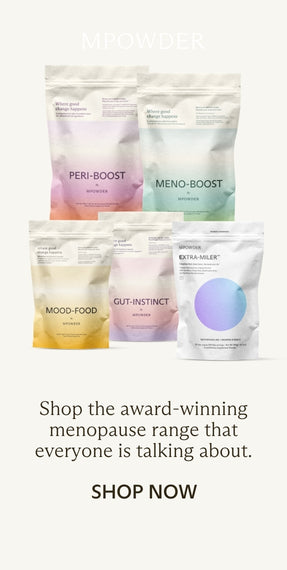
Isoflavones are most directly relevant to PERI-BOOST and MENO-BOOST.
PERI-BOOST — includes soya isoflavones as part of a daily perimenopause blend. It also brings together pea protein, cacao, lucuma, calcium, magnesium, zinc, vitamins A, C, D3, E, K2, B-complex, selenium, iron, moringa, bamboo, cinnamon, ginger and plant-based fruit powders.
MENO-BOOST — includes red clover, a botanical naturally associated with isoflavones, alongside maca, KSM-66® ashwagandha, lemon balm, cranberry, pomegranate, slippery elm and Ahiflower® oil.
Again, the cleverness is in the layering: plant compounds, minerals, adaptogens, fibre-friendly botanicals and essential nutrients working as a wider nutritional system.
Why the rest of the MPOWDER range matters too
Isoflavones are one chapter in the midlife nutrition story. They are not the whole book. Midlife asks for range. We need protein for muscle. Minerals for bones, energy and the nervous system. Fibre and botanicals for the gut. Supportive nutrients for mood, focus and resilience. Healthy fats for cells, skin and cardiovascular health.
That is why the wider MPOWDER range is designed around connected systems.
MOOD-FOOD — includes turmeric extract, magnesium bisglycinate, KSM-66® ashwagandha, lemon balm, bacopa, zinc, B vitamins, copper, chromium, manganese, biotin and black pepper extract.
GUT-INSTINCT — includes ACTAZIN® green kiwifruit powder, brown rice powder, slippery elm, ginger, marshmallow root and artichoke leaf extract.
Best isoflavone foods to add to your plate
The richest sources of isoflavones are soya-based foods, including:
- Edamame beans
- Tofu
- Tempeh
- Soya beans
- Soya yoghurt
- Miso
- Natto, if we are feeling brave
Other plant foods, including beans, chickpeas and lentils, may also contribute phytoestrogens more broadly.
3 tips for getting more isoflavones on your plate
-
Make edamame a go-to-freezer snack
Keep a bag of frozen edamame beans on standby. Steam, sprinkle with sea salt, add chilli flakes or sesame seeds, and we have a protein-rich, isoflavone-full delicious snack that takes less time than arguing with ourselves about what to eat.
-
Build one soya-based meal into the week
Start with one regular meal: crispy tofu with ginger greens, tempeh in a warm salad, miso broth with vegetables, or edamame tossed through a grain bowl.
-
Feed the gut alongside the isoflavones
Pair isoflavone-rich foods with fibre-rich plants: lentils, beans, greens, seeds, herbs, vegetables and whole grains. The gut microbiome plays a role in how some isoflavones are metabolised, so the supporting cast matters.
Final note
This article is for educational purposes only and is not medical advice. If we are taking medication, using HRT, managing a hormone-sensitive condition, pregnant, breastfeeding, or under medical supervision, we should speak to a doctor or qualified healthcare practitioner before making changes to diet or supplements.
Share Twitter Facebook Pinterest